








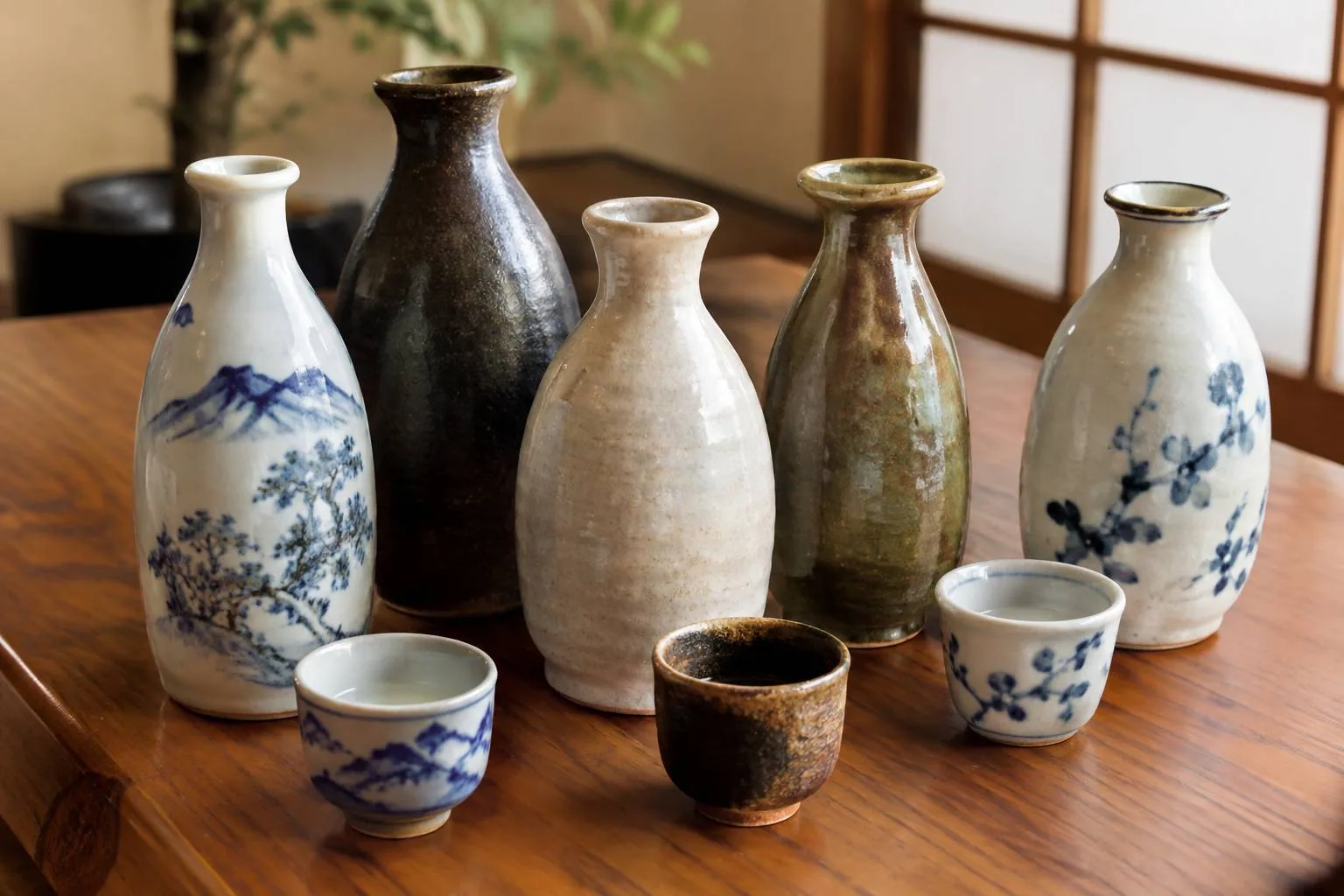
A tokkuri (徳利) is a Japanese sake bottle: a narrow-necked ceramic flask, usually holding one or two go (roughly 180 or 360 ml), used to warm sake in hot water and pour it into small cups. Vintage examples range from glazed stoneware shop bottles to fine porcelain tableware, and most are still perfectly usable today.
What is a tokkuri?
A tokkuri is a bottle for serving sake, shaped with a swelling body and a pinched neck so the pour is controlled and the heat stays in. The word covers everything from a plain village flask to a painted porcelain bottle made for a good restaurant, and the shape has barely changed in centuries because it works.
The narrow neck does three jobs at once: it slows the pour to a trickle that fills a small cup without splashing, it reduces the surface area so warmed sake cools slowly, and it makes the bottle easy to hold by the shoulder with one hand. Bottles under about 400 ml are meant for the table. Larger ones, often a shō (1.8 litres) or more, were storage and transport vessels.
A tokkuri is normally used with small cups called guinomi (a slightly larger cup for drinking neat) or ochoko (the smallest tapered cup). Together they make a sake set, sometimes sold with a matching tray. We cover the pairing in detail in our guide to vintage Japanese sake sets, tokkuri and cups.
Tokkuri shapes and what they are called
Most vintage tokkuri fall into a handful of recognisable shapes, and the name usually describes the silhouette or the original use.
- Tsurukubi (crane neck): a low, rounded body with a long slim neck. Elegant, slow-pouring, and common in porcelain.
- Kayoi-dokkuri (shop bottle): a sturdy stoneware bottle, usually 1.8 litres, that customers carried to the sake shop to be refilled. Often lettered with a shop or brewery name in iron or cobalt.
- Hakata-dokkuri / bin-gata: a tall, straight-sided bottle with a short neck, more flask than vase in feeling.
- Katakuchi: not strictly a tokkuri but a spouted, open serving vessel used to pour sake, favoured for chilled sake today.
- Katsura-gata and pear shapes: rounded bodies tapering to a narrow mouth, the everyday tableware form in most regions.
Some tokkuri come with a lid or a small ceramic stopper, though most have lost it. A missing stopper is normal and does not affect use, since the bottle is designed to be open when warming.
Which kilns made tokkuri?
Almost every Japanese pottery region made sake bottles, because every region drank sake. The differences are in the clay and glaze rather than the form.
Kiln or regionCharacter of the tokkuri TokonameIron-rich unglazed or lightly glazed stoneware, reddish brown, robust. The same clay tradition as its teapots. Seto and MinoThe broadest range: ash glazes, iron glazes, Oribe green, Shino white, and later mass-market porcelain. Arita and Kyushu porcelainWhite porcelain with cobalt blue (sometometsuke) or enamel painting, thin-walled and formal. Shigaraki and TambaCoarse sandy clay, natural ash effects, the rustic look prized in tea taste. Hagi and KaratsuSoft warm glazes, crazing, quiet colours that flatter warmed sake. Kyoto (Kyo-yaki)Refined decoration, gold and enamel, often made as part of a matching set.Because so many bottles were regional utility ware, the majority of vintage tokkuri carry no mark at all. Attribution then rests on clay colour, foot finishing and glaze behaviour rather than a signature, which is one reason unmarked pieces stay affordable. Our notes on regional pottery go further into how the Seto and Mino kilns supplied the whole country.
Shop bottles versus table tokkuri
Shop bottles and table bottles are different objects that happen to share a name, and knowing which you are looking at prevents disappointment.
A kayoi-dokkuri was working equipment. It is thick, heavy, glazed in brown or ash tones, and often carries bold brushed characters naming a sake brewery, an inn or a district. Collectors buy these for the calligraphy and the patina, and they make excellent single-stem vases or umbrella stands in the larger sizes. They are usually too big and too heavy to pass around a table.
A table tokkuri holds one or two go, weighs little, and was made to match cups. These are the ones to buy if you actually want to serve sake. If you like the look of lettered shop bottles as objects, they also sit comfortably among vases and display pieces.
How to choose a vintage tokkuri
- Decide hot or cold. For warmed sake, choose thicker stoneware or sturdy porcelain that will take repeated hot-water baths. For chilled sake, thin porcelain or a katakuchi shows the clarity better.
- Check the capacity. One go (about 180 ml) suits one or two drinkers; two go (about 360 ml) is the usual size for a small group. Anything near 1.8 litres is a shop bottle.
- Look inside the neck. Old interiors often hold staining. Light discolouration is normal, but a persistent sour smell or thick residue means the bottle has been stored wet and is best treated as decorative.
- Run a finger round the mouth rim. Rim chips are the most common damage on tokkuri, because the neck takes every knock. A small chip is cosmetic; a crack running down the neck is not.
- Test the pour if you can. A well-made tokkuri stops cleanly when you right it. Drips down the shoulder are a design flaw some bottles simply have.
- Check the foot. An unglazed foot ring showing the raw clay tells you the body and the region, and a wobble on a flat table is worth knowing about before it happens on a tray.
Condition language matters more than age with sake ware, since these were used daily. Our buyer's guide to antique Japanese pottery explains the terms sellers use for chips, hairlines and old repairs.
Using and caring for a tokkuri
To warm sake, stand the filled bottle in a pan of hot, not boiling, water for a few minutes until the sake reaches body temperature or a little above. Never put a ceramic tokkuri on direct heat, and avoid the microwave: uneven heating stresses old glaze and can crack a bottle that has survived a century.
Wash by hand with hot water and, if needed, a drop of mild detergent, then leave the bottle upside down on a rack until the inside is completely dry. Trapped moisture in a narrow neck is what creates the musty smell in old bottles. Porous unglazed stoneware, especially Tokoname and Shigaraki, holds odour more readily, so dry it longer.
Do not put a vintage tokkuri in the dishwasher. Heat, alkaline detergent and knocking against other items damage overglaze enamels, gold and crazed glazes. The same rules apply to the porcelain and stoneware in our cups and teaware, and to the pieces covered in our guide to vintage Tokoname kyusu teapots.
What a tokkuri costs and what drives value
Ordinary unmarked table tokkuri are among the most affordable vintage Japanese ceramics, while signed work by a known potter and early tea-taste pieces sit far higher. The gap comes down to four things: maker, kiln reputation, condition, and whether the piece keeps its tomobako (the signed wooden storage box that documents a maker's own work).
Age alone adds less than buyers expect. A late 20th-century bottle by a respected Hagi or Karatsu potter can be worth many times a genuinely older but anonymous village flask. Decoration quality also counts: hand-painted cobalt with confident brushwork commands more than transfer-printed patterns, which became widespread in the 20th century.
We hunt these pieces one at a time in antique shops around Japan, which is why sake ware appears irregularly rather than as a matched line. You can see how we work on our about page, and browse the tokkuri category when you want to look at bottles rather than read about them.